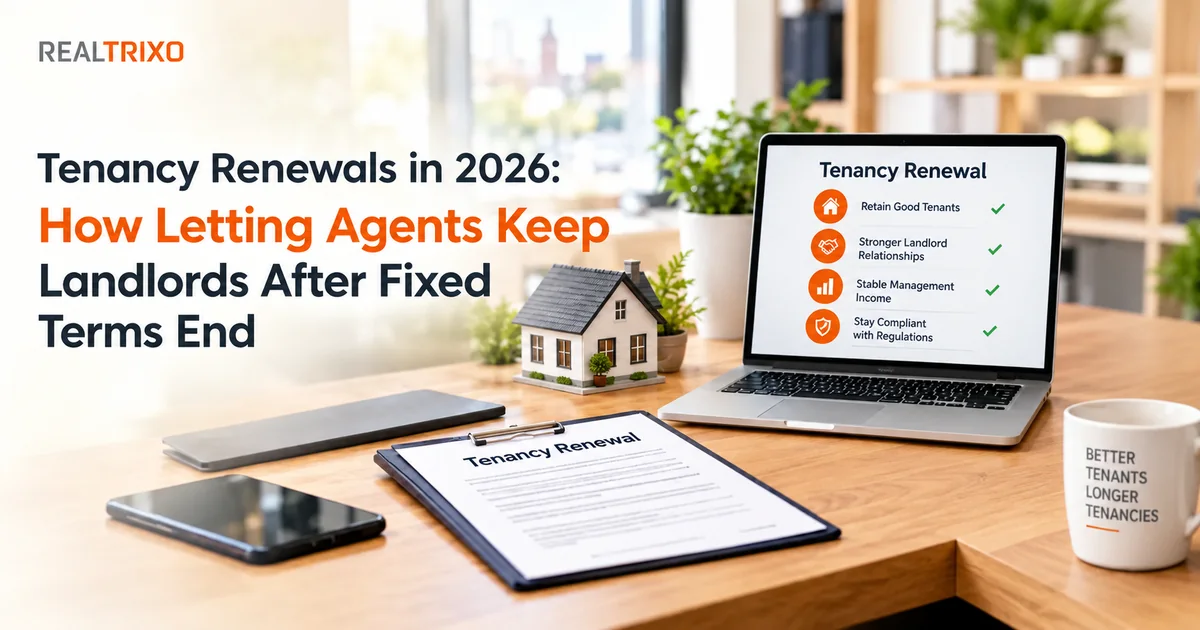
Tenancy renewals are an important part of successful property management in 2026. When a fixed-term tenancy approaches its end, landlords must decide whether to continue renting to existing tenants, negotiate new terms, or explore other options. For letting agents. This period creates an opportunity to demonstrate value, strengthen landlord relationships, and protect recurring management income.
However, landlords may consider leaving their agent because of rising management costs, poor communication, maintenance delays, or uncertainty about rental regulations. Agents who wait until the contract expires to discuss renewal risk losing valuable clients.
A proactive approach makes the difference. By reviewing property performance, communicating early, and providing practical advice, letting agents can make tenancy renewal decisions easier for landlords while supporting a more stable rental experience.
Why Tenancy Renewals Matter FOR Letting Agents in 2026
Retaining existing landlords is often more cost-effective than constantly acquiring new clients. Every landlord who remains with an agency can contribute to predictable management revenue, portfolio growth, and long-term business stability.
Renewals also help agents maintain continuity. When a landlord stays with the same agency, the team already understands the property, tenant history, maintenance requirements, and financial expectations.
Several factors make retention particularly important in 2026:
Changing regulations:
Landlords need guidance on applicable tenancy laws and compliance responsibilities.
Rental market uncertainty:
Local demand, achievable rents, and operating costs influence decisions.
Higher service expectations:
Landlords expect timely updates, transparent fees, and efficient maintenance.
Agency competition:
Property managers must demonstrate measurable value to prevent clients from switching providers.
For letting agents, an approaching tenancy end date should trigger a structured retention process rather than a last-minute reminder.
Start the Renewal Process Before the Fixed Term Ends
Timing is essential for tenancy management. Reaching out to landlords just before a tenancy expires gives time to fix problems, look at rent prices, or talk about future plans.
Agents should set up a renewal calendar that marks tenancy dates and plans communication far ahead. A first review three months before the expected end date can be a useful starting point depending on the agreement and legal rules.
During this review, agents should:
- Confirm the tenancy dates and the legal rules that apply.
- Ask landlords what they plan for the property in the future.
- Review how the tenant has paid and the condition of the property.
- Identify any repairs or service issues that are still pending.
- Check the rental demand and think about possible rent changes.
- Talk about the options that're available and agree on the next steps.
Early communication gives landlords time to make decisions. It also lets agents fix problems before they become a reason to end the management relationship.
Demonstrate the Value of Professional Property Management
Landlords are more likely to keep working with an agency when they know what the management service actually does. Just taking rent. Fixing problems now and then may not show all the benefits of professional help.
Letting agents should explain what they do during the time a tenant is living in the property. This can involve collecting rent, talking to tenants, arranging repairs, checking the property, reminding them about rules, and keeping records.
A short report can show these efforts clearly. Agents can list how often rent is paid on time, how many repairs are done, and what problems are still not. When things need to be checked again.
If there are numbers, agents can also share how fast they respond, how much money is spent on repairs, and how often the property is rented out. Reports must use data and not just say things without proof.
This way, the talk about renewing the agreement changes. Instead of just thinking about the cost of management, landlords can look at the service, the time they save, the risks they avoid, and the way the agency keeps things running smoothly.
Use Rental Market Insights to Guide Decisions
Rental pricing is a common concern when a fixed term ends. Some landlords want to increase rent to reflect market conditions, while others prefer to retain reliable tenants and minimise vacancy risk.
Letting agents should offer evidence-based recommendations using comparable properties, local demand, property condition, and recent letting activity.
A useful rental review should explain:
- The property's current rent compared with relevant local listings and achieved rents where available.
- Whether demand supports a proposed increase.
- The potential costs of vacancy, advertising, cleaning, and tenant changeover.
- Whether planned improvements could justify a higher rent.
- The legal process required to change rent for the particular tenancy.
Understand the 2026 Tenancy Law Changes
Legal awareness is essential when advising landlords about tenancy renewals. The 2026 Tenancy Law Changes require landlords to be fully aware of the rules. In England, the Renters Rights Act 2025 introduced changes that take effect from 1 May 2026. The 2026 Tenancy Law Changes mean that most existing assured shorthold tenancies become assured tenancies so the previous fixed‑term end dates no longer apply. The 2026 Tenancy Law Changes also establish that new assured tenancies generally operate on a rolling basis.
Letting agents must update their procedures to avoid relying on outdated fixed‑term practices. The 2026 Tenancy Law Changes call for letting agents to explain the arrangements clearly. The 2026 Tenancy Law Changes require letting agents to maintain records. The 2026 Tenancy Law Changes demand that landlords understand their responsibilities fully.
Can a Landlord Refuse to Renew a Tenancy Agreement?
Landlords often ask, can a landlord refuse to renew a tenancy agreement when they want to get their property back? Under the rules in England, most assured periodic tenancies do not need to be renewed because they keep going without a specific end date.
A landlord cannot just say that the tenancy is over because the original fixed term has ended. They usually have to have a legal reason to take the property back, follow the correct steps for giving notice, and get a court order if it is needed.
Letting agents need to make sure these rules are explained clearly. They should not say that a property can be taken back just because the original agreement has finished. Different rules might be in place, for people who're lodgers some types of student housing and other special situations. Agents should look at each case carefully. Ask for legal help if they are not sure.
Build a Landlord Retention Strategy
A steady retention process helps agencies manage many properties while keeping track of every detail. CRM reminders, scheduled reviews and automated communications make the work smoother.
Agents should write down each landlords priorities, service concerns, property plans and agreed actions. Follow‑up messages should confirm every decision and any tasks that are still pending.
Retention must come from service, not from pressure. When landlords receive advice, transparent costs and steady support landlords have stronger reasons to keep working with the letting agent.
Conclusion:
Successful tenancy renewal management in 2026 needs more than sending reminders. Letting agents must know the laws; letting agents must talk early; letting agents must give realistic rental advice; letting agents must show the value of letting agents' services.
When letting agents combine engagement with clear reporting and good property management, letting agents can build stronger landlord relationships and keep business stable for the long run. An organised approach lets landlords make smart choices and lets letting agents become trusted partners at every stage of tenancy renewal.