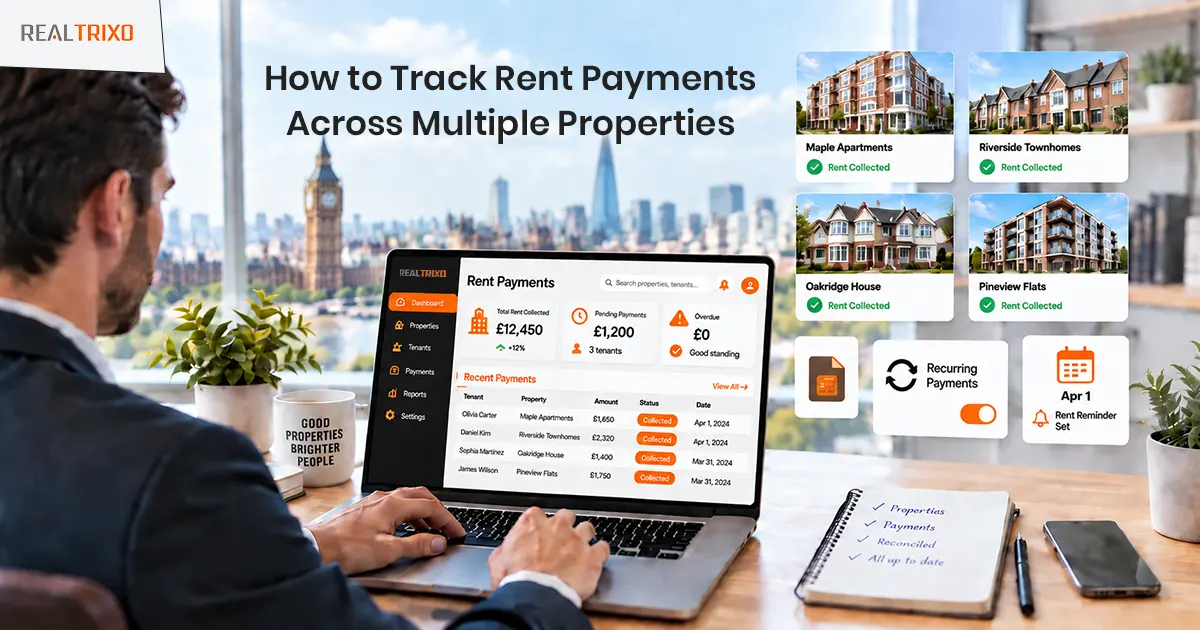
Tracking rent payments in property management is an important task for property business professionals. Rent payment for a single property can be as simple and easy as a piece of cake, but managing and tracking rent payments across multiple properties is not a bed of roses.
You need to carefully and efficiently manage your property rentals by using dedicated property management software, encouraging or requiring tenants to use automated bank transfers, and maintaining a master spreadsheet.
Continue to read, learn, and be efficient in managing and tracking rent payments across multiple properties with ease and convenience.
Understanding the Need for Maintaining Payment Tracking
Managing one rental property is simple and straightforward. But dealing with multiple rental properties without a system is a recipe for missed payments and financial chaos. Matching random Venmo transfers to specific tenants, forgetting who owes late fees, and losing track of partial payments might create worries and miscalculations for your rentals.
This guide will help systematically organise and break down the best methods to track rent payments efficiently, saving time and reducing landlord stress.
Key Features Customers Need to Look At
Managing and tracking rent payments for multiple properties is a serious issue for property management companies. Numerous matters need attention for property business owners; tracking and managing rent payments is one of them. The following significant points can help you grab the real sense of the deep understanding of tracking rent payments:
Automated Rent Processing and Overdue Tracking
Replace the existing manual spreadsheets with property management software, which helps you effectively manage and track your rent payments. The core steps of implementing a property management system you need to follow include: connecting a bank feed, setting up a tenancy profile, enabling auto-matching, configuring an arrears dashboard, and automating reminders.
UK Regulatory Framework
To meet UK compliance standards, landlords need to select the most suitable property management software, which can fulfil the UK compliance requirements. The UK compliance requirements include: maintaining digital income records, keeping safety certifications updated, logging tenancy deposit schemes, and tracking legal notices and compliance workflows, and so on…
Accounting and Reporting Integration
Simply maintaining property rentals is not sufficient; you need to look for the essential features for efficient management of your rentals. Some of the important features you must look into for the property management software include: property-level income tracking, automatic bank feeds, automated reconciliation and invoicing, and partial and late payment handling.
Tenant Engagement and Satisfaction
Create, own, or hire a centralised platform that unifies your portfolio into a single dashboard with real-time visibility. This property platform should offer: centralised dashboard, tenant self-service portal, digital ledgers and tax-ready reporting, and multi-channel payment support.
Scalability for Your Growing Business
An ideal rent tracking and management system should automate collection, reconciliation, and record-keeping. Consider whether your proposed property management system can offer: automated recurring payments, unified single ledger, automated late fee rules, real-time tenant portals, and accounting software integration.
Some of the Best UK Options
The best rent collection and tracking software options offer and combine automated open banking, direct debit, and tax digital accounting reconciliation. Some of the popular software options include the following:
Landlord Vision
This rent tracking and payment collection software offers a double-entry accounting system. It offers robust property management, arrears collection, and automated rent schedules.
August
Small portfolios can get amazing benefits with these property management portals. It offers open banking, automated rent collection, compliance tracking, and a free tier up to two.
Hammock
This is something different to the other quality options for rent tracking and payment collection, with its unique features like it an amazing option for the analytically minded landlords. It specialises in bank feed bookkeeping, real-time reconciliations, and HMRC-recognised MTD filing.
Arthur Online
Arthur Online is an amazing option for large portfolios, with its features, which include, ideal for letting management, letting agents, and with advanced workflows and automated reminders.
RealTrixo
One of the best property management software options that provide an excellent tenant experience by providing them with a self-service portal, streamlining rent payments, simplifying maintenance requests, and improving communication. At the same time, it helps landlords with automated rent collections, simplifying financial tracking, tracking compliance, and effectively managing tenant screening.
Why Manual Rent Tracking Fails as You Scale
Manual systems might fail at a larger scale in tracking rent payments and maintaining updated records with multiple properties. Humans might forget to log a payment or miscalculate a late fee, which leads to incorrect reporting and might create a tiring syndrome or “Where did this come from?” especially when dealing with multiple payment channels, making bank reconciliation a nightmare, and many more difficulties you might face with manual workflows.
Consider the following steps to track rent payments across multiple properties of your rental business.
Step 1: Establish a Unified Payment Policy
Establishing a unified payment policy might help you set up standardised due dates based on your cash flow needs. Limit payment methods for easier and more disciplined payment organisation, and phase out cash and paper checks. Outline how and when late fees are automatically calculated and enforced in the lease agreement to streamline your rent tracking and maintenance systems.
Step 2: Choose Your Tracking Method (Based on Portfolio Size)
For your small property rental business, you might think of using a manual tracking method; you should use Google Sheets or Excel with dedicated tabs for each property. You must include the columns: tenant name, property ID, amount due, payment date, payment method, and balance still due.
When choosing the fully managed letting service for your larger portfolio, you need to consider a dedicated landlord platform. A quality property management platform might help you with tenant portals, automated reminders, and direct bank syndication.
Step 3: Automate the Tracking Workflow
Set up automated text or email alerts at least 3 days before the rent is due. Encourage bank-to-bank transfers to streamline your rent collection, track the record, and to ensure funds clear reliably. Create instant digital receipts for tenants to reduce any kind of confusion regarding rent collection.
Step 4: Best Practices for Tax Readiness and Organisation
Create a separate bank account to keep your deposits secure and operating income completely isolated per property. Remember the golden rule of updating your ledger the exact day a payment clears. And finally, upload bank statements and receipts to a secure cloud drive structured by different bases that suits your requirements.
Conclusion & Next Steps
Do remember that consistency and the right tool selection are the keys to stress-free organisation of your property business. Choose the ideally suitable and perfect-fit property management software for your effective rent tracking and property management business.