Property management involves rent collection, tenant communication, maintenance requests, accounting, lease tracking, inspections, and reporting. Managing these tasks manually can consume valuable time and increase operating costs. Property management software brings these activities into one centralized system and automates many repetitive processes.
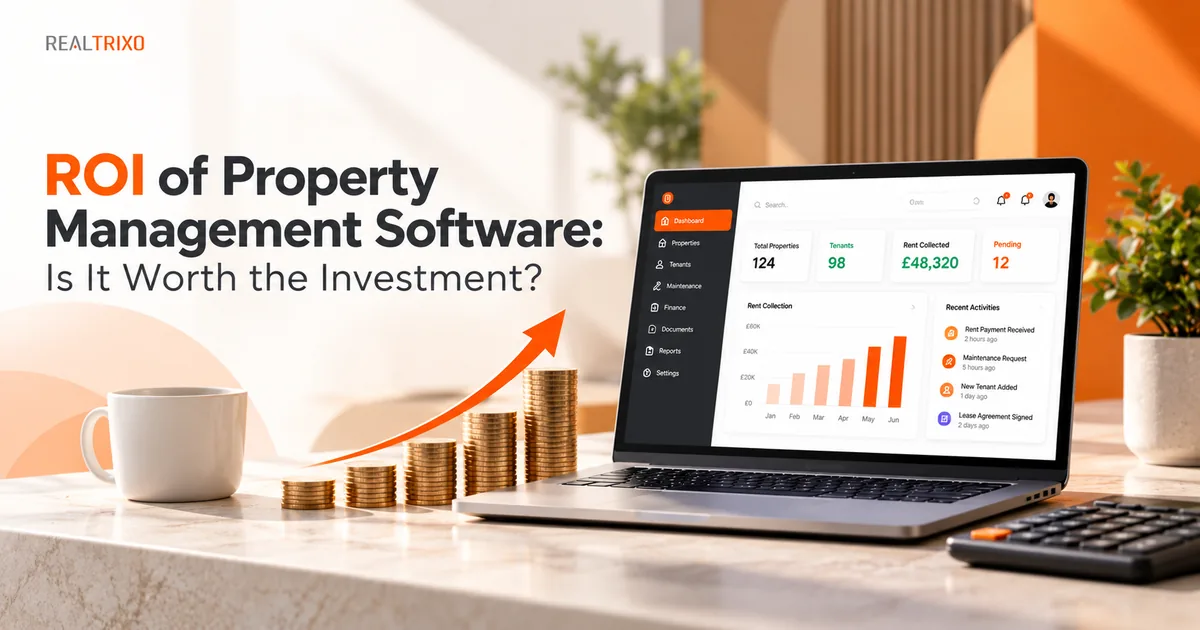
The return on investment (ROI of property management software comes from more than reducing administrative work. It can help property managers lower costs, improve productivity, reduce errors, collect rent faster, provide better tenant service, and manage a larger portfolio without increasing staff at the same time.
What is the ROI of Property Management Software?
ROI measures the financial return a business receives compared with the amount it spends on software.
The basic formula is:
ROI = (Financial Gains − Software Cost) ÷ Software Cost × 100
For example: if a property management company spends $10,000 annually on software and generates $25,000 in measurable savings and additional value, the net gain is $15,000. This represents a 150% ROI.
However, calculating software ROI should include both direct savings and indirect benefits such as improved tenant retention, faster processes, fewer mistakes, and increased portfolio capacity.
Reduce Administrative Costs
Manual property management requires employees to spend significant time entering data, preparing reports, sending reminders, updating records, and answering repetitive questions. Property management software automates many of these activities.
Managers can store tenant information, lease documents, payment records, maintenance requests, and property data in one platform.
Automation reduces administrative workloads and allows employees to focus on more valuable activities, including leasing, tenant relationships, inspections, and business development.
The labor savings alone can contribute significantly to software ROI, particularly for companies managing a large number of properties.
Improve the way rent is collected. The flow of cash
Late rent payments can cause money problems for people who own property and for companies that manage properties. Tools can make it easier to collect rent by offering ways to pay online. By sending reminders automatically.
Tenants can get messages about payments. See their payment details without needing to talk to property managers for simple questions.
Automated systems can help cut down on:
- Rent that is paid late
- Tracking payments by hand
- Entering data
- Checking payments against records
- Calling or emailing tenants to follow up
Collecting rent faster and more regularly helps with the flow of money and also means less time is needed from staff to handle payments.
Lower Property Maintenance Cost
Maintenance is a part of running a property well, and software can really help here. Tenants can send in repair requests through a portal. Managers can then assign jobs, talk to contractors, check how things are going, and keep track of all service history.
Having everything in one place makes it easier to spot problems that keep coming up and to fix the ones first. It also helps keep a record of what was spent on repairs and how well each vendor did their job.
When small issues get fixed fast, managers can stop them from turning into costly problems. Being more organized means fewer wasted dollars and better overall performance for the property.
Save Valuable Employee Time
Time savings are one of the easiest ways to measure software ROI.
Consider an employee who spends several hours each week preparing reports, updating spreadsheets, sending reminders, and entering information manually. Automation can reduce much of this workload.
Businesses can estimate the financial benefit using:
Hours Saved × Employee Hourly Cost = Labor Savings
For example, saving 10 employee hours each week can create substantial annual savings. These hours can also be redirected toward activities that generate revenue or improve tenant satisfaction.
Reduce Human Errors
Manual processes can lead to incorrect entries, duplicate information, missed deadlines, inaccurate calculations, and misplaced documents.
Property management software creates standardized workflows and centralized records. Automated calculations and notifications can reduce the likelihood of common administrative mistakes.
Fewer errors mean less time spent correcting information and lower risk of financial or operational problems.
Accurate records also make it easier for managers to review property performance and prepare financial reports.
Make Better Choices Using Property Information
Choices require correct and easy-to-get information. Property management systems can give reports and displays that cover how many people are living in the building, money collected from rent, costs, repairs, agreements with tenants, and what tenants are doing.
By collecting information from many spreadsheet files,s managers can look at all the information in one place and see patterns faster.
This can help companies find places where they are spending a lot on repairs, money that has not been paid when buildings are empty, when agreements with tenants are ending, and other chances to make more money.
How to Calculate Your Software ROI
Before you invest in software, take a look at your current operating costs. Track all the expenses you currently have related to work rent collection, maintenance coordination, paperwork, reporting, tenant turnover,and fixing errors. These are the costs that add up over time.
Next, compare these costs with what the software will cost and how much it will save. You want to see the difference between what you spend and what you would spend with the software.
For example, we say your manual administration costs $35,000 a year. With the software, that drops to $22,000. That means you save $13,000. Now if the software itself costs $7,000 per year, the net gain is $6,000 after you subtract the software cost from the savings.
To get the return on investment, use this formula:
($13,000 minus $7,000) divided by $7,000, multiplied by 100. That gives you 85.7% ROI.
This number shows how much value you get from the investment. The real return could be even better. Think about improvements in tenant retention, faster rent collections,s and more time to manage tasks. These benefits aren’t always easy to measure. They add real value. So the actual return on your software investment may be higher than the number on paper.
What Features Help Make Software Worth the Investment?
The best features depend on what a company needs. Businesses should look for automated rent collection, tenant portals, maintenance management, accounting, lease tracking, reporting, document storage, communication tools, and workflow automation.
Integration also matters a lot. Software that works with accounting, payment, leasing, or business systems can cut down on repeating work and make the workflow smoother.
Final Thoughts
The return on investment for property management software comes from its ability to lower costs while making work easier and improving the quality of service. Automation can save time for employees, make rent collection simpler, let you fix maintenance problems, cut down on mistakes, and help keep tenants longer.
For property management companies that are growing, the ability to handle units without hiring more people can lead to even better returns. By looking at the cost of the software and the savings it brings, as well as the long-term benefits, property managers can decide if the investment will help their financial and operational goals.