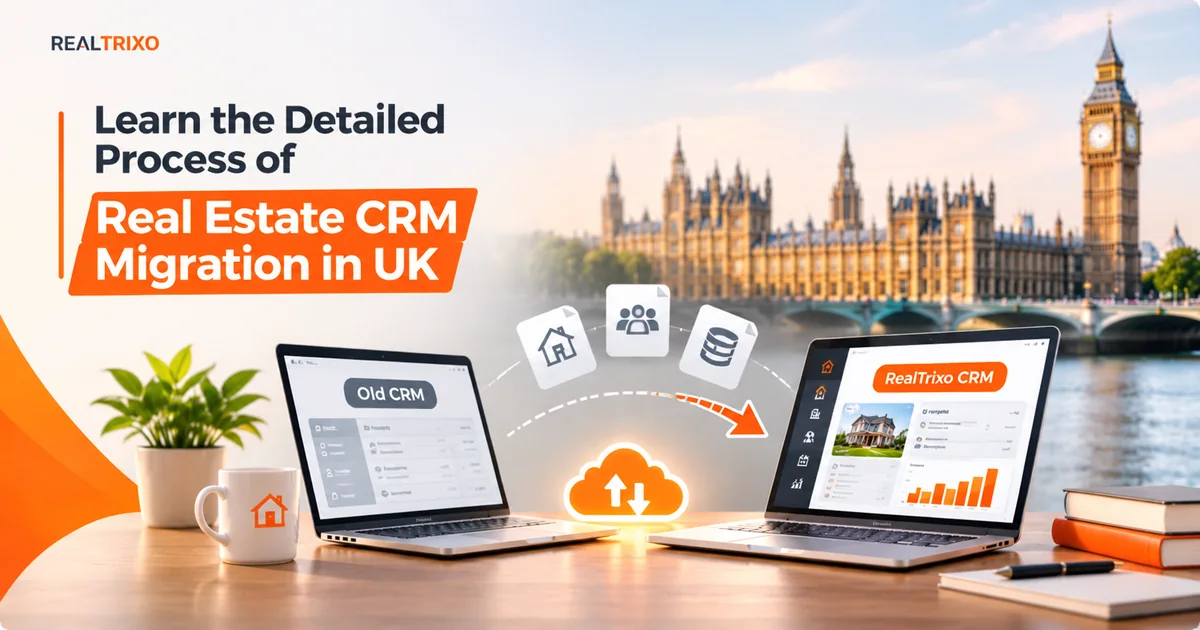
The UK's property market heavily relies on CRMs to run their daily operations and fulfill the challenging demands of the associated stakeholders. Once the business sets up their portfolio on a property software it’s difficult for them to change it to another one. But with the right strategy to migrate the entire work, the businesses can easily handle this job. Here in this blog, we’ll explore the entire process and how the property managers can execute the complex job in a seamless way. So, let’s read on.
The Key Ingredient of the Property Management
Before we move on to anything, the main aspect that counts a lot in this journey is the preservation and successful restoration of the ingredient we name as “data”. Since it contains all of the records, track logs, transactions, and much more. If any of the details get missed in the mid-way this can hurt the business and cost a lot.
That’s why no business wants to take that risk, and if they do, they always consider the optimal solution that brings the best ROI and upgrade their systems to the next level.
Why Need to Migrate the Property Management Software?
Tenants do migrate from one apartment to another, but the portfolios also have to migrate to better management tools to ensure the clients don’t have to hassle. The backend job is not visible to the end beneficiaries, such as tenants or property purchasers, while if it’s not efficient, the whole workflow gets disturbed.
Eventually, the businesses have to move towards a better alternative and say bye to the existing management CRM. Some of the other aspects that lead to the migration of CRMs can be:
- Compliance & Security Upgrades
- Interactive Owner & Tenant Portals
- Better Integration & Automation
- Complying with the Legislation Rules
- Overcoming Technological Obsolescence
The Phase-wise Process of CRM Migration
Since the migration of a CRM is a complex project, the aspects of it are catered to cautiously, as any mistake can cost the business a lot. Below are the sequential phases that are being followed for a successful relocation job:
Planning & Audit
First of all, it all started with the review of the existing data structures and selection of the new CRM. In this phase, the framework for the upcoming tasks is developed, and all of the available alternatives are compared. The new software must be capable of handling the existing jobs and executing them in an efficient manner.
Data Cleaning & Migration
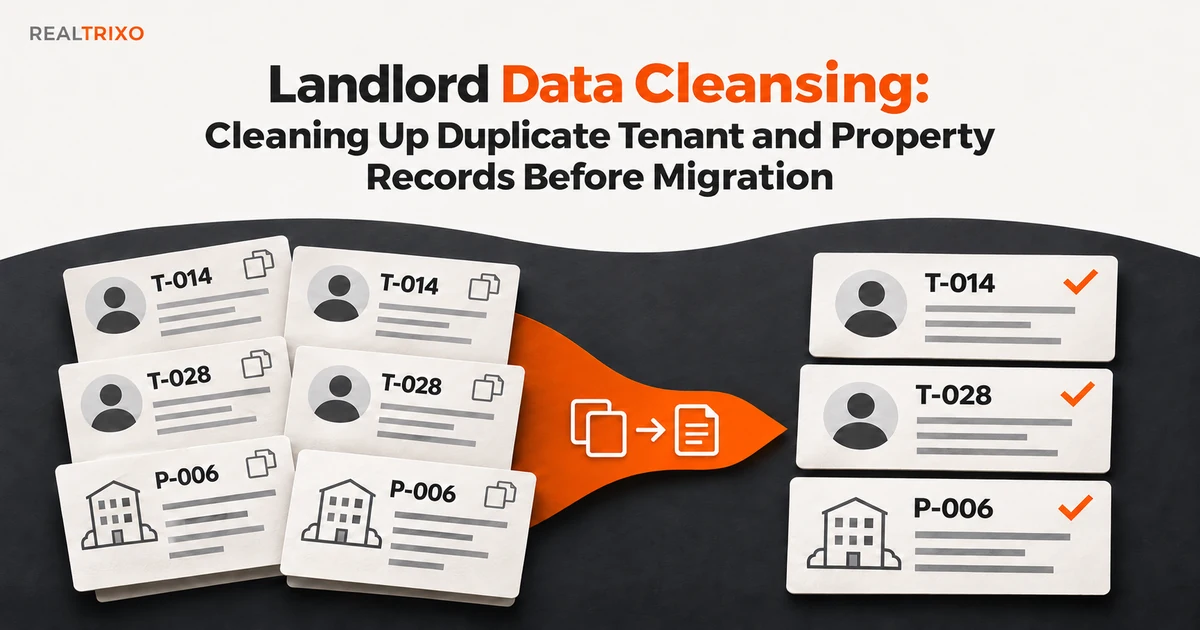
Once the upcoming portal is finalized, the next comes the removal of junk files that aren’t needed in the first place. Doing this reduces the transfer load and also sorts out cluttered things before they cause more trouble for the property portfolios.
Meanwhile, this also includes fixing formatting errors and filtering out the data that is sitting idle for long periods. While the entire migration is being carried out with multi-layered backups that ensures to have the timestamp based restorable data stacks.
Trial Testing & Launch
As soon as the migration phase is successfully concluded, the team maps out the real-time usability of the property software. Before any dramatic change, small test migrations are run in batches to analyze how they deal with it.
However, if any error occurs during this process, the technical team addresses it, ensuring smooth upcoming executions. The trial phase isn’t about one-time testing, but it contains multiple sessions to figure out the errors that occurred during the processes.
Finally, as the critical aspects are being carried out for the full-scale implementation. There are still chances of minor errors, but that’s been resolved with the usage of the new CRM.
Expected Time to Move from One CRM to Another
The deliverability of the deployment of the new CRM can vary as per the organization’s size and their structural frameworks. For instance, the expected time for this job to complete is mentioned below in the chart:
| Company Size | Expected Timeline | Data Load |
| Small Business (Simple) | 2 – 4 Weeks | • Low data volume (under 5,000 records) • Out-of-the-box features only • No complex integrations or custom fields |
| Mid-Market (Moderate) | 1 – 3 Months | • Medium data volume (5,000 - 50,000 records) • Some custom workflows and fields • Integration with 2-3 standard tools (e.g., email, marketing) |
| Enterprise (Complex) | 3 – 6+ Months | • High data volume (50,000+ records) • Deeply customized objects and heavy automation • Legacy system deprecation and custom API integrations |
The Bottom Line
All in all, we hope you now understand the entire transition and migration of property CRM. The project is critical and counts a lot for the business’s growth, but it must be handled by a reliable company like RealTrixo. Our trained staff is capable of handling standard to complex systems and upgrading them in the minimal timeframe. Also, our backup-first approach ensures we deliver every job to retrieve and access any of the previous data in a smarter way. Ping us today to discuss your queries with us or directly book a consultation call for free.